

Products — Rotary Table
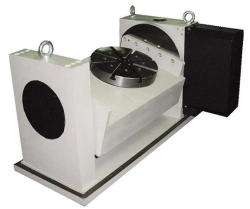
Universal Rotary Dividing Table with CNC Control Model SU26-12
US$2,100-6,000
Dimensions (DxWxH), mm:
839x528x436
Dimensions (DxWxH), mm:
839x528x436
STAN-Samara CJSC 🇷🇺
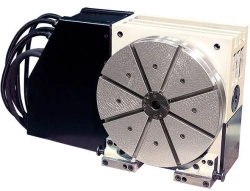
Tilt Rotary Dividing Table Controlled by CNC Model SK 36-12
US$1,500-4,800
Dimensions (DxWxH), mm:
660x405x225
Dimensions (DxWxH), mm:
660x405x225
STAN-Samara CJSC 🇷🇺
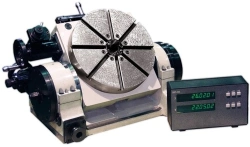
Universal Rotary Dividing Table Model SU30-11
US$900-3,000
Faceplate diameter:
300
Dimensions (DxWxH), mm:
607x561x240
STAN-Samara CJSC 🇷🇺
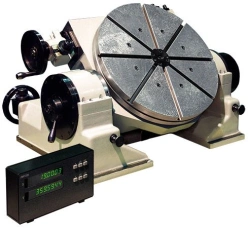
Universal Rotary Dividing Table Model SU50-11
US$1,500-4,800
Weight:
480
Number of T-shaped radial slots:
8
STAN-Samara CJSC 🇷🇺
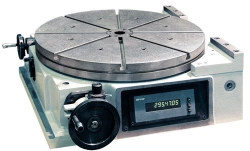
Cantilever Rotating Dividing Table Model SK 63-11(12)
US$1,500-4,800
Faceplate diameter:
630
Highest weight of the workpiece:
500
STAN-Samara CJSC 🇷🇺
FAQ
•What materials are used in the construction of rotary tables?
Our rotary tables are constructed from high-quality materials like cast iron and steel, ensuring durability and long-lasting performance in various industrial settings.
•Can rotary tables be customized for specific applications?
Yes, rotary tables can be customized to fit specific industrial needs, such as altering sizes or adding features for enhanced functionality in manufacturing processes.
•What industries commonly use rotary tables?
Rotary tables are widely used in industries like furniture production, CNC machining, and concrete manufacturing due to their versatility and precision.
•Are rotary tables compatible with CNC systems?
Many of our rotary tables are designed to integrate seamlessly with CNC systems, offering precise control and automation for complex machining tasks.
•What are the common features of rotary tables?
Common features of rotary tables include high precision, load capacity, and the ability to tilt or rotate, which are essential for tasks requiring exact positioning.